
Creamy Potato Soup Without That Gluey, Pasty Texture
Gluey potato soup almost always comes from one of two mistakes: the wrong potato or too much blending. Here is the version I make on weeknights, plus the texture rules that keep it silky.

For about three winters I made potato soup that tasted great and felt like wallpaper paste. I blamed the cream, the broth, even the pot. It was the immersion blender, and it was the potatoes, and once I fixed both I stopped making gluey soup entirely.
This is the version I make now. It takes 45 minutes, uses one pot, and the texture stays spoonable and silky even on day three.
Prep time: 15 minutes · Cook time: 30 minutes · Total: 45 minutes · Serves: 6 as a main, 8 as a starter
Why potato soup turns gluey
Potatoes are packed with starch granules. When they cook, those granules swell and soften. When you then beat them hard, with a blender, a food processor, or an immersion blender run too long, the granules rupture and spill long starch molecules into the liquid. Those molecules link up and give you that stretchy, sticky, almost elastic texture. It is the same reason mashed potatoes go gummy in a stand mixer.
Two things decide whether this happens to you. The first is the potato. Russets are the highest in starch, which makes them fluffy when baked and extremely easy to turn gluey when blended. The second is the tool. A high-speed blender will wreck potato soup in about ten seconds flat, and an immersion blender will do it in thirty if you keep going chasing smoothness.
So I use Yukon Golds, which sit in the middle on starch and have enough natural butteriness to carry the soup, and I never fully blend. Part of the pot gets mashed, the rest stays in chunks.
What you’ll need
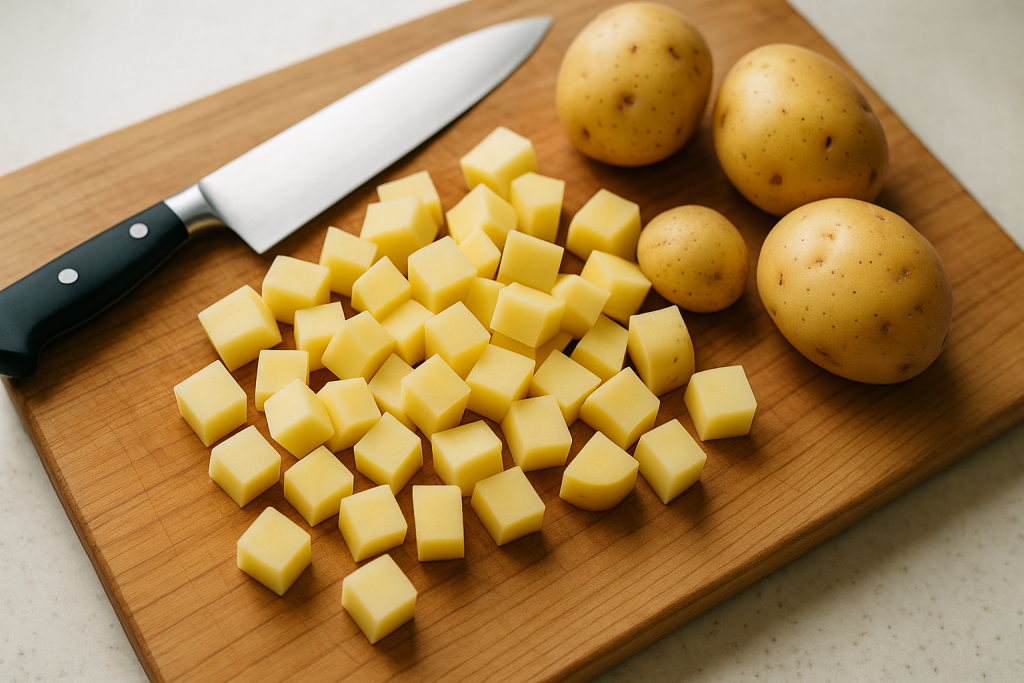
- 3 pounds Yukon Gold potatoes (about 6 medium), peeled and cut into 3/4-inch cubes
- 4 tablespoons unsalted butter
- 1 large yellow onion, diced (about 1 1/2 cups)
- 2 celery ribs, diced small
- 3 garlic cloves, minced
- 3 tablespoons all-purpose flour
- 5 cups low-sodium chicken broth (vegetable broth works too)
- 2 bay leaves
- 1 1/2 teaspoons kosher salt, plus more to taste
- 1/2 teaspoon freshly ground black pepper
- 1 cup whole milk
- 1/2 cup heavy cream
- 1 teaspoon apple cider vinegar or fresh lemon juice
- Toppings: shredded sharp cheddar, crumbled bacon, sliced scallions, sour cream
Cut the potatoes right before they go in the pot. If you cube them an hour ahead, hold them in cold water or they will oxidize and turn gray, then drain them well so you are not adding water to the soup.
How I make it
- Melt the butter in a large Dutch oven or heavy pot over medium heat. Add the onion and celery with a pinch of salt and cook 6 to 8 minutes, stirring now and then, until soft and translucent. Do not brown them. You want sweetness, not color, or the soup takes on a muddy look.
- Add the garlic and cook 30 seconds, just until you smell it.
- Sprinkle the flour over the vegetables and stir constantly for 1 to 2 minutes. It will look like wet sand and that is correct. This step cooks out the raw flour taste and, more importantly, gives the dairy something to hold onto later so it does not break.
- Pour in the broth about a cup at a time, scraping the bottom and stirring until smooth before adding more. Add the potatoes, bay leaves, 1 1/2 teaspoons salt, and the pepper.
- Bring to a boil, then immediately drop to a steady simmer. Cook uncovered 14 to 18 minutes, until a cube crushes easily against the side of the pot with a spoon. Stir gently and only occasionally. Every aggressive stir knocks starch loose.
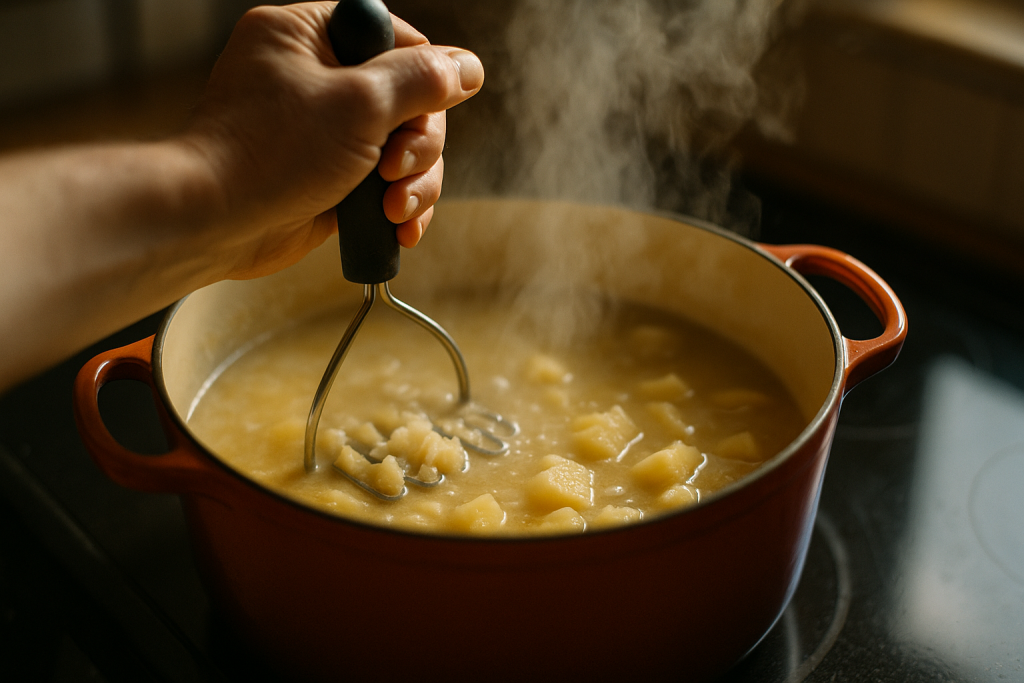
- Pull out the bay leaves. Now mash: take a potato masher and press straight down into the pot 10 to 15 times, moving around. Lift it out, look, and stop while you can still see plenty of whole cubes. The soup thickens more as it sits, so leave it looser than you think you want.
- Turn the heat to low. Stir in the milk and cream and warm it through for 3 to 4 minutes. Do not let it boil after the dairy goes in. A hard boil with milk in the pot is how you get a curdled, grainy surface.
- Stir in the vinegar or lemon juice, taste, and salt again. That small amount of acid is what keeps the soup from tasting flat and heavy, and you will not taste it as sourness.
The blending rule, if you want it smoother
Some people want potato soup fully velvety. You can get close without glue, but you have to change the method, not just go gentler.
Ladle 2 cups of the cooked soup into a regular blender along with a splash of the cream, blend on low for 15 to 20 seconds, and stir it back into the pot. Short, low, one pass. Blending a small portion means you are rupturing a small amount of starch, and the rest of the pot dilutes whatever gumminess you created. What does not work is leaning an immersion blender into the whole pot for a minute. I have done it. The soup goes from creamy to tacky somewhere around the 40-second mark and there is no coming back.
A food mill or a potato ricer is the actual pro answer: pass the cooked potatoes through it and the starch granules stay intact. I own a ricer and still mostly use the masher, because one pot beats two pieces of equipment on a Tuesday.
Substitutions that work
Red potatoes are the safest choice after Yukon Golds. They are waxy, hold their shape, and are almost impossible to turn gluey, though the soup will be a little less rich. If russets are what you have, peel them, cut them slightly larger at about 1 inch, and mash only five or six times. Do not blend them at all.
Half-and-half can replace the milk and cream together, use 1 1/2 cups. Evaporated milk also works and is more forgiving of heat. Skip skim milk, there is not enough fat to coat anything and the soup tastes thin.
For a dairy-free version, use full-fat canned coconut milk in place of the milk and cream, and swap the butter for olive oil. It reads a little sweet, so add an extra teaspoon of vinegar and plenty of black pepper.
Want it heartier? Brown 1 pound of ground sausage first, set it aside, build the soup in the drippings, and stir the sausage back in at the end. If you add cooked chicken or ham, bring it up to a safe serving temperature of 165°F (74°C) in the pot before you serve.
If it already turned gluey
I will be honest with you: you cannot unbreak it. The starch is out and it is not going back in. What you can do is thin the soup with warm broth, a half cup at a time, which stretches the gumminess across more liquid and makes it edible. Add crisp toppings, bacon, croutons, raw scallion, so there is contrast on the spoon. Or pour it into a baking dish, top it with cheddar and breadcrumbs, and bake it at 375°F (190°C) until bubbling. As a casserole, nobody notices the texture at all.
Storage and reheating
Cool the soup to room temperature within two hours, then refrigerate in a covered container for up to 4 days. It thickens a lot overnight. Reheat gently on the stove over medium-low, stirring in milk or broth a splash at a time until it loosens. Keep it below a simmer. In the microwave, use 60 to 90 second bursts at 50 percent power and stir between each one.
Freezing is the one thing I would skip. Potato cells rupture when they freeze and thaw, and dairy separates, so you get grainy soup with watery pockets. If you know you want some in the freezer, stop after step 6, freeze the broth-and-potato base flat in a bag for up to 2 months, then thaw it overnight in the fridge and stir in the milk and cream while reheating.
Keep cookingMore soups
All soups Soups
SoupsChicken Noodle Soup From Scratch, Broth Included
One whole chicken, one pot, and about two hours gets you broth with real body and soup that …
2 h 5 min Soups
Soups7 Simple Ingredients for Easy Potato Soup Recipe Creamy
A cozy and creamy potato soup that is simple to make and perfect for chilly evenings.
40 min Soups
Soups5-Minute Simple Tomato Soup from Scratch You’ll Love
A quick and cozy tomato soup made with canned tomatoes, garlic, and optional cream for a rich finish. …
15 min