
Fluffy Scrambled Eggs: The Small Changes That Fix Them
I made rubbery scrambled eggs for years before I figured out it was never the eggs, it was the heat and the timing. Here is exactly how I make them soft and fluffy now.
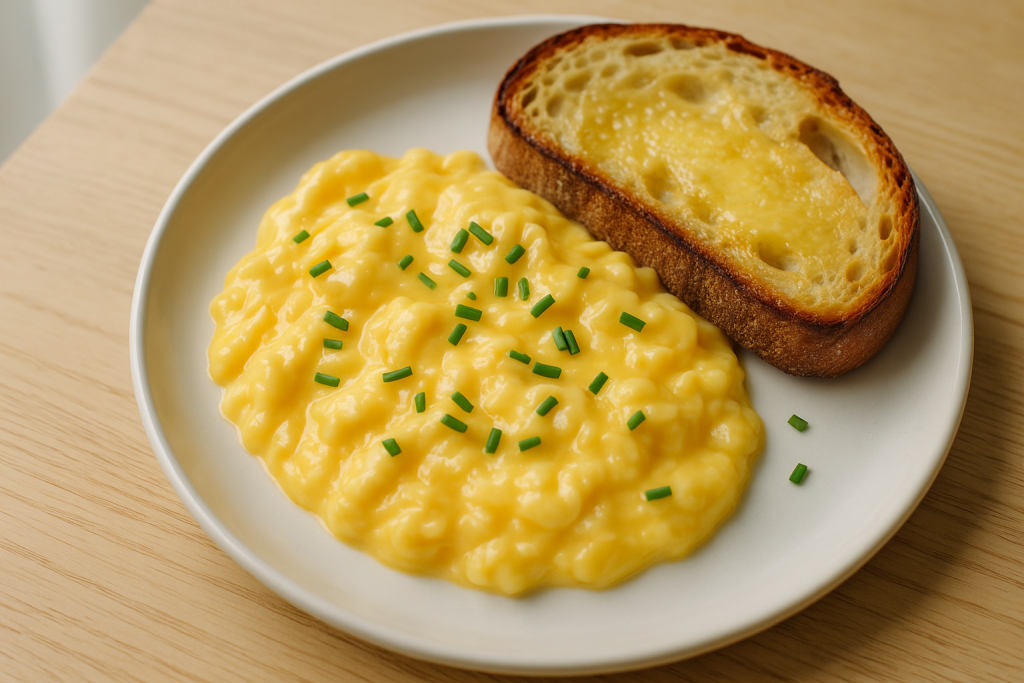
I made sad, weepy scrambled eggs for about ten years before I understood the problem was never the eggs. It was the burner. Once I dropped the heat to medium-low and started pulling the pan off before the eggs looked done, they came out soft and custardy every single morning, no cream, no whisking tricks, no special pan.
Here is how I make them now, plus the small adjustments that actually move the needle.
Prep time: 3 minutes. Cook time: 5 to 6 minutes. Total time: about 9 minutes. Serves: 2 generously, or 3 alongside toast and fruit.
What you will need
- 6 large eggs
- 1/4 teaspoon kosher salt (or a scant 1/8 teaspoon table salt)
- 2 tablespoons water or heavy cream, optional
- 1 tablespoon unsalted butter
- Freshly ground black pepper, to taste
- 1 tablespoon chopped chives or a tablespoon of soft goat cheese, optional, for the end
That is it. Three eggs per person is my standard for a real breakfast, two if it is a side.
How I make them
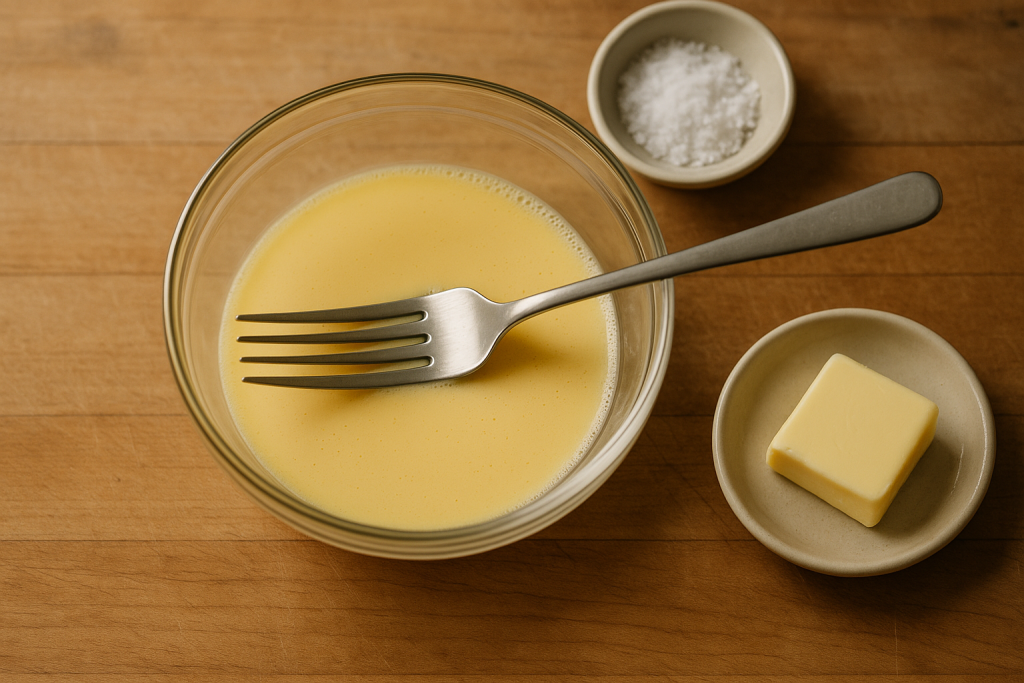
- Crack the eggs into a bowl, add the salt, and whisk hard with a fork for about 30 seconds, until the yolks and whites are one even yellow with no ropy streaks of white left. Streaks mean uneven texture later.
- Let the salted eggs sit for 10 to 15 minutes if you have time. This is optional but it makes a noticeable difference in tenderness.
- Whisk in the water or cream, if using.
- Set an 8- or 10-inch nonstick skillet over medium-low heat and add the butter. You want it to melt and foam lazily, not sizzle and brown. If it browns, the pan is too hot. Wipe it out and start over.
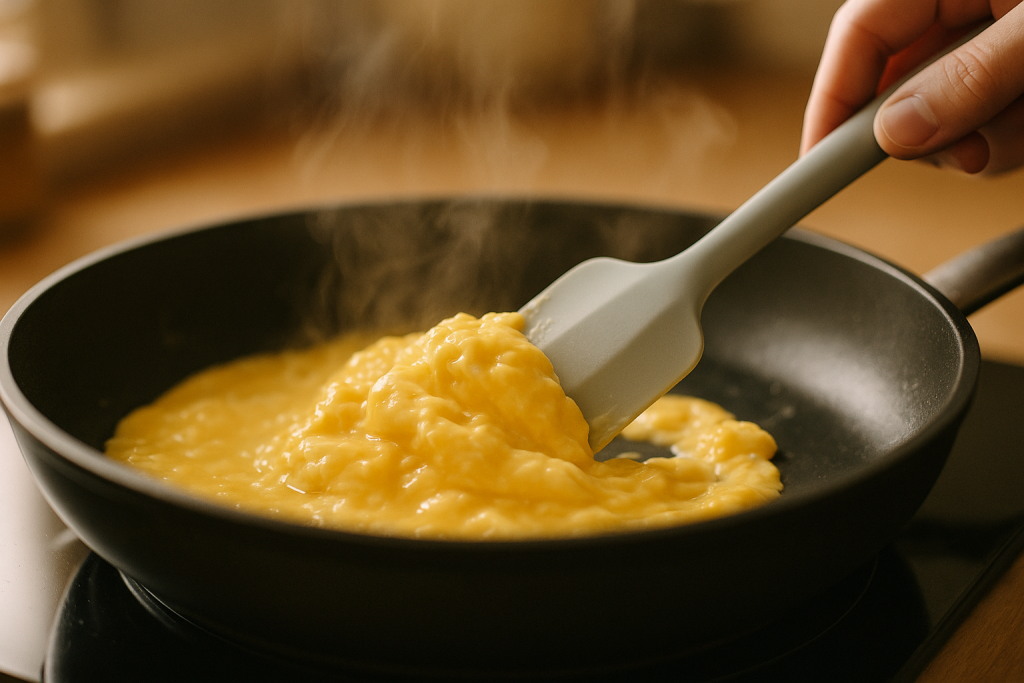
- Pour in the eggs. Wait about 20 seconds, then start pushing them around with a silicone spatula, scraping the bottom and folding the set curds toward the center.
- Keep moving the eggs steadily for 3 to 5 minutes. They will go from liquid, to a loose porridge, to soft curds sitting in a little wet egg.
- Pull the pan off the burner while the eggs still look slightly underdone and glossy. Keep stirring off the heat for another 15 to 20 seconds. The residual heat finishes them.
- Slide them onto warm plates right away, crack pepper over the top, and scatter on chives or dot with cheese if you want.
Eggs do not wait. From pan to plate should be seconds, not minutes.
Low heat does most of the work
Egg proteins set between roughly 145 and 180°F. On high heat they slam past that range in seconds, squeeze together, and push out the water they were holding. That puddle on the plate is not condensation. It is the moisture your eggs just lost.
Medium-low gives you a 30-second window instead of a 3-second one, which is the whole difference between custardy and squeaky. On my gas stove that is a low flame that does not lick up the sides of the pan. If your eggs are done in under two minutes, your burner is too high, full stop.
Milk, water, or nothing at all
I skip milk. It dilutes the egg flavor and the extra water has to cook off, which means more time in the pan and a greater chance of overcooking. If you want insurance against drying out, use a tablespoon of water per three eggs, or heavy cream if you want them richer. Cream has enough fat to stay emulsified; milk tends to break and weep.
If you want the fluffiest possible texture and do not mind a slightly different, more souffléed result, add nothing and just whisk in more air. Honest version: the heat matters ten times more than whatever liquid you stir in.
Salt early, not at the table
Salting the raw eggs and letting them sit 10 to 15 minutes is the trick I resisted the longest and now do most mornings. The salt starts breaking up the protein bonds so they set more gently, and the eggs hold onto their moisture better. Salting at the very end does the opposite of what you want, drawing water to the surface right as you plate.
Quarter teaspoon of kosher salt for six eggs is my baseline. If you are adding cheese, bacon, or smoked salmon, go lighter.
Pan and spatula
Nonstick, 8 to 10 inches for six eggs. Too large a pan spreads the eggs thin and they set before you can move them. Stainless works but you need more butter and a confident hand. Cast iron holds heat so aggressively that it keeps cooking long after you pull it off, which fights everything else you are trying to do.
Use a flexible silicone spatula, not a fork and not a whisk. You want to lift and fold big soft curds, not shred them into granules. If you prefer small curds, stir faster and more constantly. If you want big pillowy ones, stir slowly and push from the edges toward the middle.
What went wrong, and what to change
If they came out rubbery and bouncy, the heat was too high or you cooked them 30 seconds too long. Pull the pan earlier next time, when they still look wet enough to make you nervous.
If there is liquid pooling on the plate, that is squeezed-out water from overcooking, or milk that broke. Lower the heat and switch from milk to water or cream.
If they are browned on the bottom, the pan was hot before the eggs hit it. Butter should foam gently, never turn tan.
If they taste flat, you underseasoned. Eggs need more salt than people expect, plus fat. A final knob of butter stirred in off the heat fixes almost any batch.
Safety and the soft-set question
The USDA recommends cooking egg dishes to an internal temperature of 160°F, which for scrambled eggs means firm throughout with no visible runny liquid. Very soft, glossy, barely-set eggs are below that. I eat them that way and serve them that way to my household, but if you are cooking for someone pregnant, very young, elderly, or immune-compromised, cook the eggs until they are set all the way through, or use pasteurized eggs in the shell.
Add-ins and swaps
Cheese goes in during the last 30 seconds, off the heat, so it melts without seizing the eggs: shredded cheddar, crumbled feta, soft goat cheese, or cream cheese cut into small cubes. Cooked bacon, sausage, or ham goes in at the same stage, already hot.
Vegetables need to be cooked and drained first, in a separate pan. Mushrooms, spinach, onions, and tomatoes all release water, and that water will ruin the texture if it hits raw egg. Cook them down, move them to a plate, wipe the skillet, then start the eggs.
Out of butter, use olive oil or bacon fat. The eggs will taste different but the texture holds. Duck eggs work with the same method and set a little faster, so check them 30 seconds earlier.
Storing and reheating
Scrambled eggs are a cook-and-eat food, but leftovers keep in an airtight container in the fridge for 3 to 4 days. Get them cooled and refrigerated within two hours of cooking.
Reheat gently or you will undo everything. I microwave them at 50 percent power in 20-second bursts, stirring between each, until just warm, usually under a minute for one serving. A splash of water or a small pat of butter before reheating helps. They will never be as good as minute one, but they are decent chopped into a breakfast burrito or folded into fried rice, where a little extra firmness does not matter. I do not freeze plain scrambled eggs; they come back grainy and watery.
Keep cookingMore breakfast
All breakfast Breakfast
Buttermilk Pancakes From Scratch That Actually Rise
My go-to buttermilk pancakes, plus the reason real buttermilk makes a taller, softer stack than milk and vinegar …
25 min Breakfast
10 Tasty High Protein Breakfast Ideas for Meal Prep You’ll Love
A collection of ten high-protein breakfast ideas that are meal prep friendly, ensuring you start your day with …
50 min Breakfast
Deliciously Easy Simple Breakfast Casserole with Sausage
A cozy, filling breakfast casserole made with sausage, eggs, and bread that’s perfect for feeding a crowd or …
1 h 5 min