
Butternut Squash Soup and What to Serve With It
A roasted butternut squash soup that tastes like it simmered all day, and the honest answer to what turns it into a real weeknight dinner.
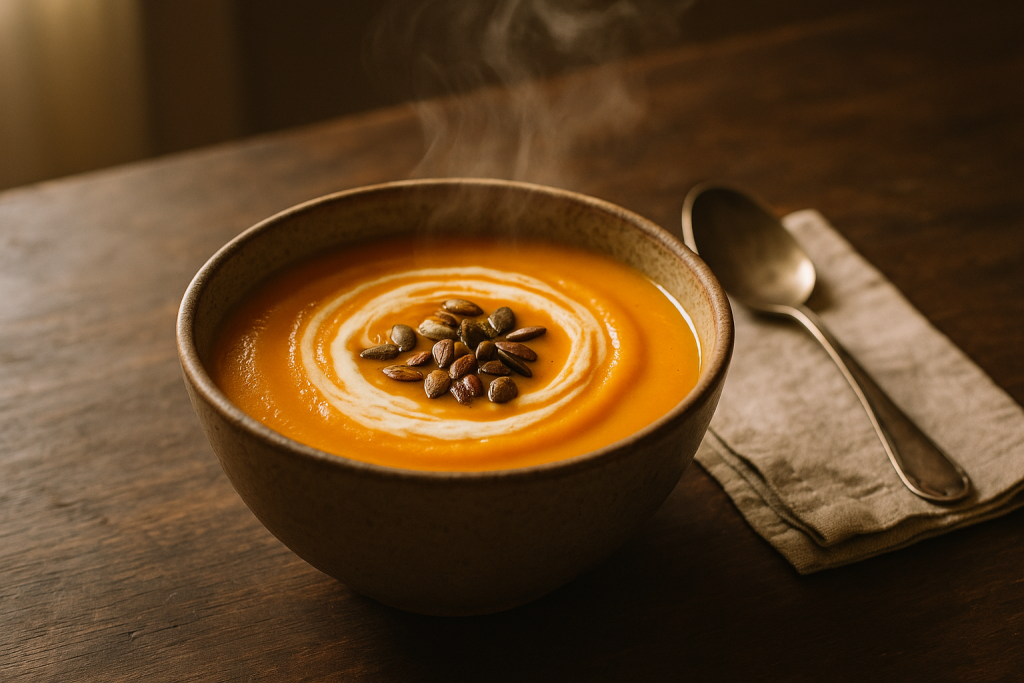
I made butternut squash soup for years before I figured out why mine tasted thin compared to the bowl I had at a restaurant in Vermont. I was boiling the squash. The second I started roasting it instead, the soup went from pleasant to something my family asks for. The other thing I learned the hard way: squash soup alone is not dinner, and I will tell you exactly what fixes that.
Prep time: 15 minutes | Cook time: 45 minutes | Total time: 1 hour | Serves: 4 as a main, 6 as a starter
What you will need
- 1 large butternut squash, about 3 pounds
- 3 tablespoons olive oil, divided
- 1 medium yellow onion, chopped
- 2 medium carrots, chopped
- 3 garlic cloves, smashed
- 1 tart apple (Granny Smith or Honeycrisp), peeled and chopped
- 4 cups chicken or vegetable broth, plus more as needed
- 1/2 teaspoon ground cinnamon
- 1/4 teaspoon freshly grated nutmeg
- 1/8 teaspoon cayenne pepper
- 1/2 cup heavy cream
- 1 1/2 teaspoons kosher salt, plus more to taste
- Black pepper
- 1 tablespoon apple cider vinegar or fresh lemon juice
If your squash is closer to 2 pounds, pull the broth back to 3 cups and add from there. Too much liquid is the single most common way this soup goes wrong, and it is easier to thin a thick soup than to rescue a watery one.
How I make it
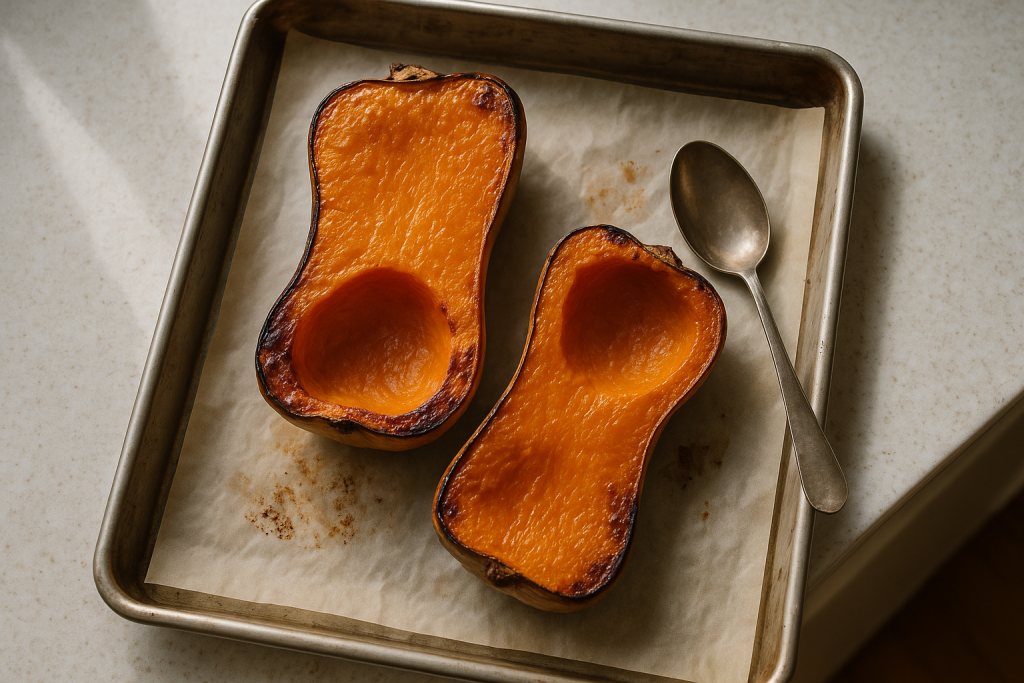
- Heat the oven to 425°F (220°C). Cut the squash in half lengthwise, scoop out the seeds, and rub the cut sides with 1 tablespoon of the oil. Season with salt and lay the halves cut side down on a sheet pan lined with parchment.
- Roast 40 to 45 minutes, until a knife slides into the thickest part with no resistance and the edges are browned where they touched the pan. That browning is the whole point. Let the halves sit until you can handle them, then scoop the flesh out with a big spoon and discard the skins.
- While the squash roasts, heat the remaining 2 tablespoons oil in a large Dutch oven or soup pot over medium. Add the onion and carrots with a pinch of salt and cook 8 to 10 minutes, stirring now and then, until the onion is soft and just starting to color.
- Add the garlic, apple, cinnamon, nutmeg, and cayenne. Cook 2 minutes, stirring, until it smells like the spices woke up.
- Add the roasted squash flesh and 4 cups broth. Bring to a simmer, then cook uncovered for 15 minutes so the apple goes completely soft and the flavors come together.
- Blend until smooth. An immersion blender right in the pot is easiest. If you use a countertop blender, work in batches no more than half full, remove the center cap from the lid, and cover the opening with a folded towel. Hot soup in a sealed blender will blow the lid off, and I have the ceiling stain to prove it.
- Stir in the cream and the salt. Taste. Then add the vinegar or lemon juice and taste again. This is the step people skip, and it is the difference between a soup that tastes flat-sweet and one that tastes finished.
- Thin with broth a splash at a time if you want it looser. Finish with black pepper.
The texture question
Silky soup comes from blending long enough, not from straining. Let the blender run a full 60 to 90 seconds. Most people stop at 20 seconds, see something smooth-ish, and call it done. If you want it genuinely velvety, push the blended soup through a fine mesh sieve with the back of a ladle, but I only bother when company is coming.
Too thick after it sits? It will thicken more in the fridge. Thin with broth, not water, and reheat gently.
What to serve with butternut squash soup
Butternut squash soup is sweet, soft, and all one texture. Whatever goes next to it needs to bring salt, crunch, or protein, ideally two of the three. That is the whole rule.
If you want it to be actual dinner
A grilled cheese with sharp cheddar and a little Gruyère is the one my kids vote for every time, and the salt plus the crisp bread covers everything the soup is missing. A roasted chicken thigh on the side works just as well, skin on, cooked to an internal temperature of 165°F. For a meatless version, crisp a can of drained, dried chickpeas in a hot skillet with olive oil and smoked paprika and spoon them right on top of the soup.
If the soup is the first course
Keep it small, about 3/4 cup per person, and serve something sharp alongside: an arugula salad with lemon, shaved Parmesan, and toasted walnuts. Crusty bread with good butter. Don’t put a second rich, creamy thing on the table, or dinner starts feeling heavy before the main course lands.
The toppings that earn their place
Toasted pumpkin seeds, crumbled bacon, a swirl of cream or plain Greek yogurt, fried sage leaves, or a few croutons. Pick two, not five. My standard bowl gets pepitas and a thin drizzle of cream, and that is enough.
Skip the sweet pairings. Cornbread, sweet rolls, and honey-glazed anything push the squash into dessert territory.

Substitutions that actually work
- No heavy cream: use full-fat canned coconut milk, 1/2 cup, and the soup turns slightly tropical in a way I like. Half-and-half works but gives you a thinner body. Skip the cream entirely if you want, and add an extra tablespoon of olive oil at the end instead.
- Pre-cut squash: a 2-pound bag of cubes works. Toss with oil and salt, spread on a sheet pan in one layer, and roast 25 to 30 minutes at 425°F (220°C) until the edges brown. Do not crowd the pan, or it steams.
- Frozen squash: it will not brown, so the soup tastes milder. Compensate by caramelizing the onions longer, a full 15 minutes, and adding an extra half teaspoon of salt.
- No apple: leave it out and add 1 teaspoon of maple syrup at the end. The apple brings acidity more than sweetness, so keep the vinegar either way.
Sweet potato can replace up to half the squash. All sweet potato gets cloying.
Cutting a butternut squash without a fight
Microwave the whole squash for 2 to 3 minutes first. It softens the skin just enough that your knife stops skating off the surface. Trim both ends flat, stand it up, and cut down through the neck. Use a heavy knife and keep your other hand behind the blade, never in front of it.
Roasting it in halves, skin on, means you never have to peel it at all. That is why I do it that way.
Storage and reheating
Cooled soup keeps in an airtight container in the refrigerator for 4 days. Reheat on the stove over medium-low, stirring, until it steams, about 8 minutes for a single portion. Microwave reheating works but do it in 60-second bursts with a stir between, because the thick parts scorch at the bottom.
It freezes well for up to 3 months, though cream-based soup can look grainy after thawing. If you plan to freeze it, hold back the cream, freeze the base, then stir the cream in when you reheat. Thaw overnight in the fridge and whisk briskly as it warms.
Leftover soup is also the best pasta sauce you are not making: thin a cup of it with a few tablespoons of pasta water, toss with cheese tortellini, and top with crisped sage and Parmesan.
Keep cookingMore soups
All soups Soups
SoupsCreamy Potato Soup Without That Gluey, Pasty Texture
Gluey potato soup almost always comes from one of two mistakes: the wrong potato or too much blending. …
45 min Soups
SoupsChicken Noodle Soup From Scratch, Broth Included
One whole chicken, one pot, and about two hours gets you broth with real body and soup that …
2 h 5 min Soups
Soups7 Simple Ingredients for Easy Potato Soup Recipe Creamy
A cozy and creamy potato soup that is simple to make and perfect for chilly evenings.
40 min