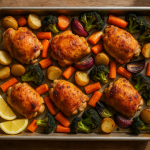
This is the dinner I make when I’ve got nothing planned and twenty minutes of patience left. One skillet, sausage, a couple of bell peppers, an onion, and that’s genuinely it. The whole thing takes about 30 minutes, and most of that is hands-off browning time while I clean up the cutting board.
The version below is the one I’ve settled on after making it roughly once a month for years. The trick is cooking the sausage and the vegetables in stages instead of dumping everything in at once.
Time and yield
- Prep time: 10 minutes
- Cook time: 20 minutes
- Total time: 30 minutes
- Serves: 4
What you’ll need
- 1 1/2 pounds Italian sausage links, sweet or hot (about 5 to 6 links)
- 2 tablespoons olive oil, divided
- 1 large yellow onion, sliced into 1/2-inch strips
- 3 bell peppers, any colors, sliced into 1/2-inch strips (I use one red, one yellow, one green)
- 4 garlic cloves, thinly sliced
- 1/2 teaspoon kosher salt, plus more to taste
- 1/2 teaspoon black pepper
- 1 teaspoon dried oregano
- 1/4 teaspoon red pepper flakes (skip if you used hot sausage)
- 1/2 cup chicken broth, dry white wine, or water
- 1 tablespoon red wine vinegar
- 2 tablespoons chopped fresh parsley, optional
A 12-inch skillet is the right size here. Cast iron or stainless both work well because you want real browning. In a nonstick pan the sausage will cook fine but you won’t get the browned bits on the bottom that make the sauce taste like anything.
How to make it
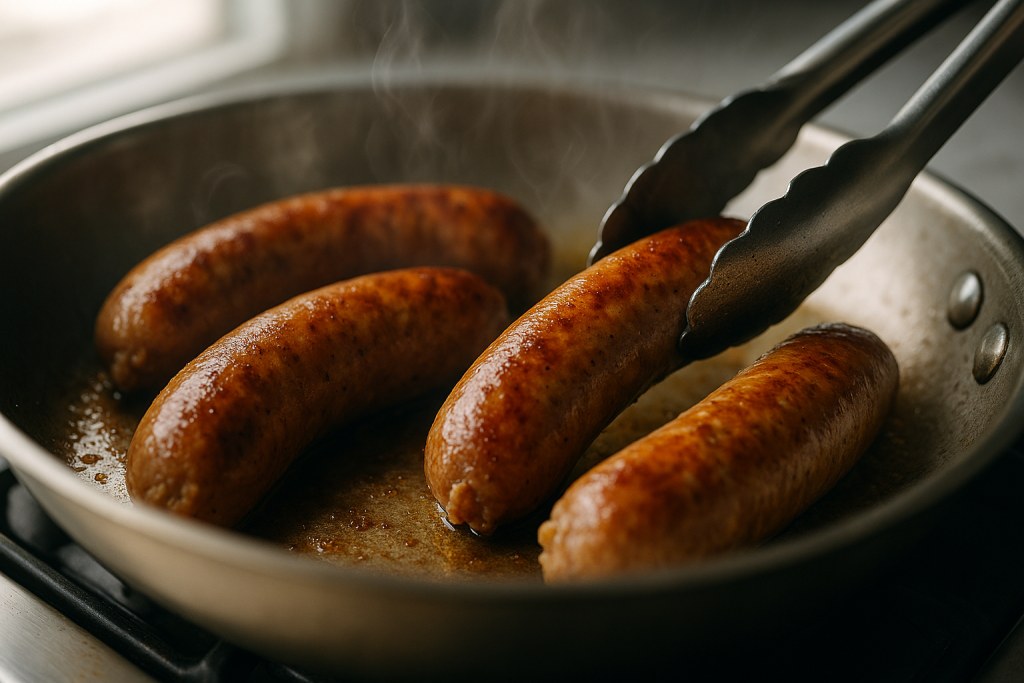
- Brown the sausage whole. Heat 1 tablespoon of the olive oil in a 12-inch skillet over medium heat. Add the sausage links and cook for about 8 to 10 minutes, turning every couple of minutes, until browned on all sides. They will not be cooked through yet. That’s fine. Move them to a plate.
- Cook the onions and peppers. Add the remaining tablespoon of oil to the same skillet, still over medium heat. Add the onion and peppers with the salt and black pepper. Cook 8 to 10 minutes, stirring every minute or two, until the peppers are floppy and the onion edges are going brown. Don’t stir constantly or nothing will color.
- Add the garlic and seasoning. Stir in the garlic, oregano, and red pepper flakes. Cook 45 seconds, just until you smell the garlic. Sliced garlic burns fast at this stage, so keep it moving.
- Deglaze. Pour in the broth and scrape the bottom of the pan with a wooden spoon to lift the browned bits. Let it bubble for a minute.
- Finish the sausage. Cut the browned links into 1-inch coins on a diagonal, or leave them whole if you’re serving them on rolls. Nestle them back into the peppers along with any juice from the plate. Cover, reduce to medium-low, and simmer 6 to 8 minutes, until the sausage reaches 160°F (71°C) at the center for pork sausage, or 165°F (74°C) if you’re using chicken or turkey sausage. Check with an instant-read thermometer in the thickest link.
- Season and serve. Stir in the red wine vinegar off the heat. Taste and add salt if it needs it. Scatter the parsley over the top.
That vinegar at the end is the one step people skip and shouldn’t. Sausage is fatty and the peppers turn sweet as they cook, so the pan needs something sharp to push against. A squeeze of lemon works if you have no vinegar.
Why I brown the links whole first
If you slice raw sausage into coins and brown the pieces, you lose a lot of fat and juice into the pan and the coins end up dry and a little rubbery. Browning the links whole seals the outside, then slicing after gives you clean-cut pieces that finish gently in the broth. It also means the cut sides soak up the pan juices during those last few minutes.
Squeezing sausage out of its casing works too if you want something closer to a crumble, and it cooks faster. But then it stops being sausage and peppers and becomes a different dish, better over pasta than on a roll.
Ways to serve it
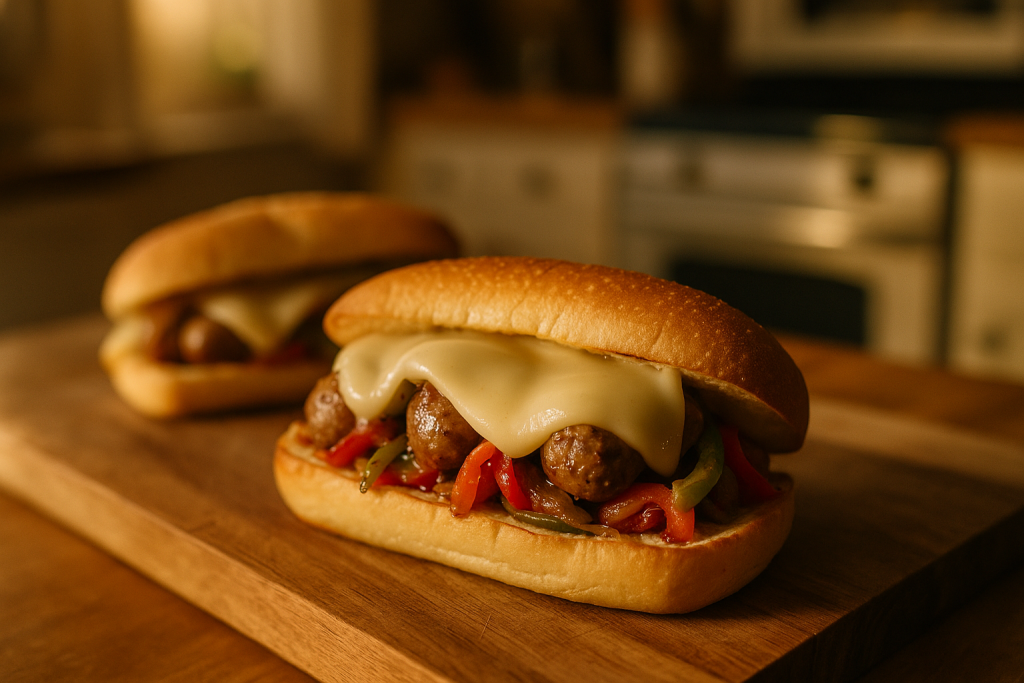
Straight out of the skillet with crusty bread is how we eat it most often. It also goes over polenta, over rice, or tucked into hoagie rolls with a slice of provolone melted under the broiler for 90 seconds. Tossed with a pound of cooked penne and a splash of the pasta water, it feeds six instead of four.
For a sheet-pan version, toss everything with the oil and seasonings and roast at 425°F (220°C) for 25 to 30 minutes, turning once. You lose the pan sauce but gain a free stovetop.
Substitutions that actually work
Chicken or turkey Italian sausage swaps in straight across, but it has much less fat, so add an extra teaspoon of oil in step 1 and pull it off the heat as soon as it hits 165°F (74°C). It goes dry quickly past that point.
Kielbasa is already fully cooked, so brown the coins for 3 to 4 minutes and add them back only for the last 2 minutes of simmering. Fresh bratwurst works and tastes good with a teaspoon of caraway seed in place of the oregano.
No fresh peppers? A drained 12-ounce jar of roasted red peppers, sliced, will do. Cook the onion alone for 8 minutes first, then add the roasted peppers in the last 3 minutes since they’re already soft. Frozen pepper strips also work but release a lot of water, so cook them uncovered a few extra minutes to drive it off before adding the broth.
If you want it saucier, stir in a 14.5-ounce can of diced tomatoes with the broth and simmer 5 minutes longer. That makes it a better pasta topping and a worse sandwich filling.
What goes wrong
Crowded pan, steamed peppers. Three bell peppers and a large onion fill a 12-inch skillet right to the top. If your skillet is 10 inches, cook the vegetables in two batches or drop to two peppers.
Heat too high on the sausage is the other one. Over medium-high the casings split and the outsides char before the middle is anywhere close to done. Medium, turning every two minutes, gets you even color.
And if the bottom of the pan starts going too dark while the peppers cook, add a splash of the broth early and scrape. Those bits belong in the sauce, not burnt to the pan.
Storage and reheating
Cool it to room temperature within two hours and refrigerate in an airtight container for up to 4 days. It tastes better on day two, once the peppers have soaked in the juices.
Reheat in a skillet over medium with a tablespoon of water, 4 to 5 minutes, until steaming throughout. The microwave works at 50 percent power in one-minute bursts, stirring between, which keeps the sausage from turning tough.
It freezes for up to 3 months, though the peppers come out softer. Thaw overnight in the fridge and reheat in a skillet, not the microwave, and add a spoonful of broth to loosen it. If you’re planning to freeze it from the start, cut the peppers into 3/4-inch strips instead of 1/2-inch so they hold their shape better.