Shrimp is the only protein I keep in the freezer that goes from frozen to dinner faster than my rice cooker finishes a pot of rice. Three minutes in a hot pan and it is done. The catch is that four minutes is too long, so everything else has to be ready before the shrimp hits the skillet.
This is the garlic butter base I make most weeks, plus the four ways I turn it into an actual dinner instead of a snack standing at the stove.
Prep and cook times
Prep: 8 minutes. Cook: 7 minutes. Total: 15 minutes. Serves 4.
That prep time assumes thawed, peeled shrimp. If yours are frozen solid, add 5 minutes for a cold water thaw, which you can do while you slice the garlic.
What you need
- 1 lb large raw shrimp (21/25 count), peeled and deveined, tails on or off
- 3 tablespoons unsalted butter
- 1 tablespoon olive oil
- 4 garlic cloves, thinly sliced
- 1/4 teaspoon red pepper flakes
- 1/2 teaspoon kosher salt
- 1/4 teaspoon black pepper
- 1/4 cup dry white wine or low-sodium chicken broth
- 2 tablespoons fresh lemon juice, plus the zest of half a lemon
- 3 tablespoons chopped fresh parsley
Buy the frozen bag, not the “fresh” shrimp sitting on ice at the counter. Almost all of that was frozen on the boat and thawed at the store, so the bag is usually the fresher one and it thaws on your schedule.
How I cook it
- If the shrimp are frozen, put them in a colander and run cold tap water over them for about 5 minutes, tossing once or twice. They are ready when they bend easily. Never use warm water and never leave them on the counter to thaw.
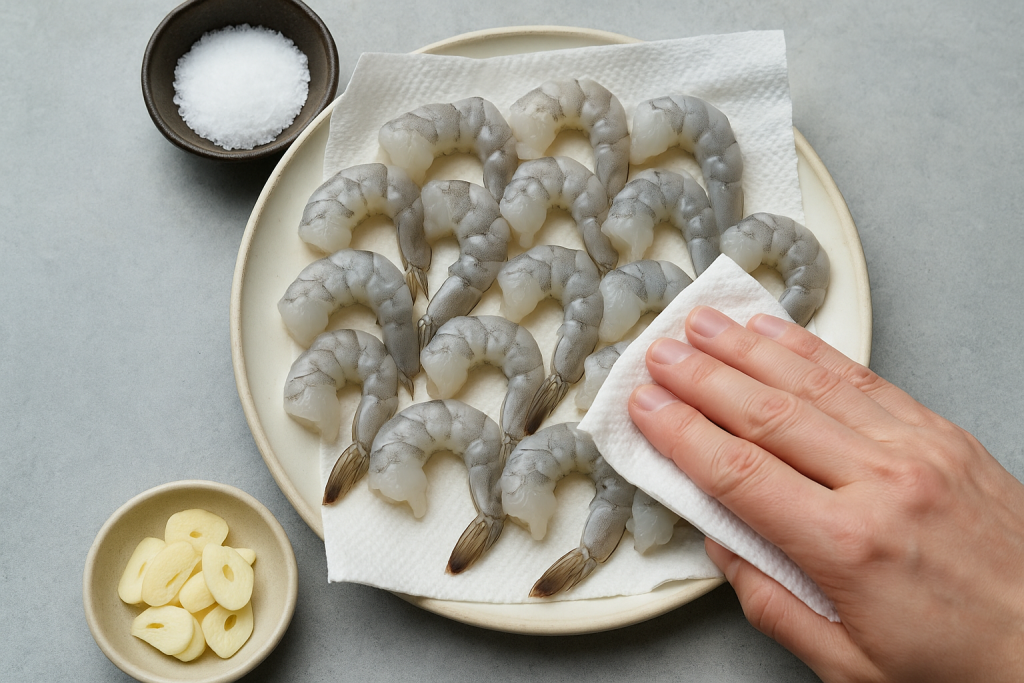
- Dry the shrimp well between paper towels. Wet shrimp steam instead of searing, and that is the difference between browned edges and pale, watery shrimp. Season with the salt and pepper.
- Heat the olive oil and 1 tablespoon of the butter in a 12-inch skillet over medium-high until the butter foams. Add the shrimp in a single layer, with space between them. If your pan is smaller, cook in two batches.
- Cook 90 seconds without moving them, then flip. Cook another 60 to 90 seconds, until they are opaque and curled into a loose C. Move them to a plate. They will finish cooking on their own heat.
- Turn the heat to medium. Add the garlic and red pepper flakes to the empty pan and stir for 30 seconds, just until the garlic smells sweet. Do not let it brown.
- Pour in the wine or broth and scrape the bottom of the pan. Let it bubble down by about half, roughly 1 minute. Take the pan off the heat, swirl in the remaining 2 tablespoons butter, the lemon juice and zest.
- Return the shrimp and any juices to the pan, toss for 15 seconds to coat, and finish with parsley.
Shrimp are safely cooked at an internal temperature of 145°F (63°C), but they are too small to check reliably with a thermometer. The shape tells you more: a loose C is cooked, a tight O is overcooked, and a straight shrimp is still raw in the middle.
Turning that skillet into four different dinners
Over pasta
Start a pot of water before you touch the shrimp. Cook 12 ounces of linguine, save a cup of the pasta water, and add the drained pasta plus a splash of that water to the skillet with the sauce. The starch pulls the butter and lemon together into something that actually coats the noodles instead of pooling at the bottom of the bowl.
Tacos
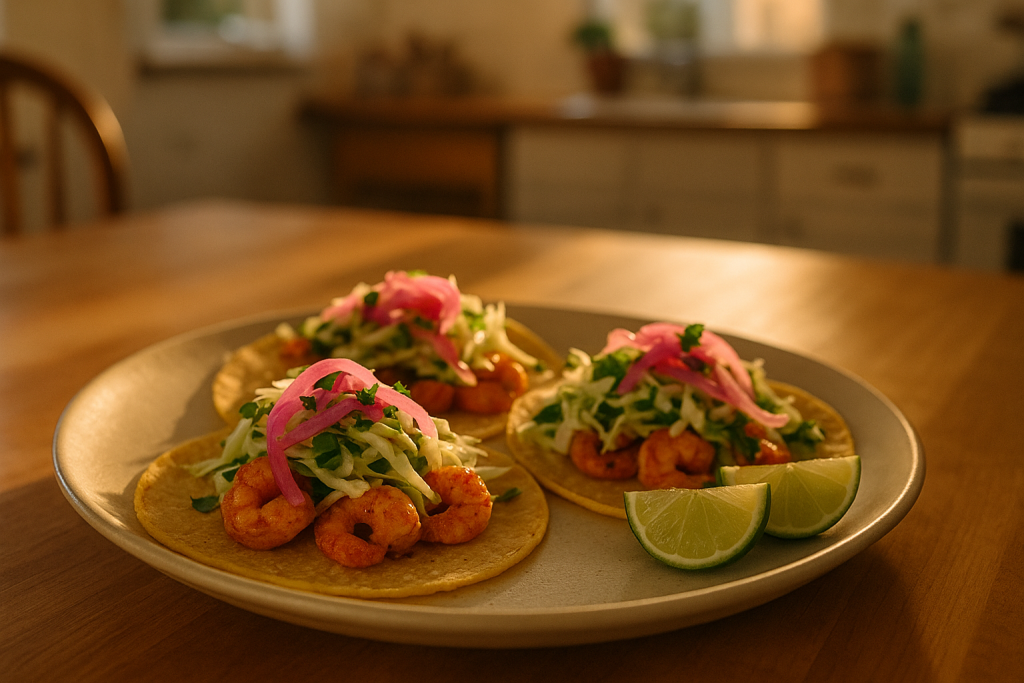
Swap the lemon for lime and the parsley for cilantro, and add 1 teaspoon each of chili powder and cumin with the garlic. Warm corn tortillas directly over a gas burner for about 15 seconds a side. Cabbage tossed with lime juice and salt takes two minutes and does the job of a dressed slaw.
Fried rice
This one needs cold cooked rice, so it is a leftovers move. Cook the shrimp, set them aside, then scramble two eggs in the pan, add 3 cups cold rice and a cup of frozen peas and carrots, and fry hard for 4 minutes. Finish with 2 tablespoons soy sauce and fold the shrimp back in at the very end.
Grain bowl
Pile the shrimp and pan sauce over whatever cooked grain you have, add avocado and quick-pickled red onion, and you have dinner that also packs well for lunch the next day. Microwave rice pouches are fair game here.
What makes shrimp rubbery
Almost always heat plus time, in that order. A crowded pan is the sneakiest version of this: three pounds of shrimp in a 10-inch skillet drops the pan temperature, the shrimp release water, and they sit there simmering for six minutes while you wait for color that never comes. Cook in batches even when it feels fussy.
The second cause is finishing in the pan. I pull the shrimp when they still look slightly underdone in the thickest part, because they keep cooking for a good minute off the heat. If you are adding them to pasta or rice, pull them even earlier.
One more thing worth knowing: precooked shrimp, the pink ones with the curled tails, cannot be improved. They are already fully cooked, so all you can do is warm them for 45 to 60 seconds. For any recipe with a real pan sauce, buy raw shrimp. The gray ones.
Substitutions
No wine in the house is fine. Chicken broth works, and so does plain water with an extra squeeze of lemon, though the sauce will be a little thinner. Skip the deglazing liquid entirely and you still get garlic butter shrimp, just without the sauce to spoon over rice.
Bay shrimp or small 51/60 count shrimp cook in about 60 seconds total, so cut the timing roughly in half and keep them moving. Sea scallops work in this same pan sauce at 2 minutes per side. Frozen peeled shrimp with the tails on look better on a plate but are annoying in pasta, so I buy tail-off for anything with noodles or rice.
If you want this without butter, use 3 tablespoons olive oil and add a tablespoon of the pasta water at the end to loosen the sauce. Dairy-free butter also works, though it browns faster, so keep the heat at medium.
Storage and reheating
Cooked shrimp keep 3 days in the refrigerator in a covered container. I reheat them the way I would reheat eggs, which is barely: 30 seconds in a skillet over low heat with a spoonful of water or broth, or not at all. Cold garlic butter shrimp chopped into a salad the next day is genuinely better than reheated shrimp.
Do not refreeze shrimp you thawed and cooked, and do not leave cooked shrimp sitting out longer than two hours, or one hour if your kitchen is above 90°F. If you know you will have leftovers, cook the shrimp in two batches and hold the second batch raw in the refrigerator, sauce and all ready to go. It takes three minutes tomorrow and tastes like you made it fresh, because you did.