My husband told me he hated fish for about eleven years. Then one night I bought cod on sale, baked it with butter, lemon and a handful of crushed crackers, and he had seconds. What he actually hated was fish that had been sitting around too long and then cooked until it fell apart. That’s a different problem, and it’s fixable.
This is the recipe I give people who are suspicious of fish. Mild white fish, a crisp buttery top, done in 25 minutes start to finish.
Buttery Lemon Cracker-Topped Cod
Prep time: 10 minutes. Cook time: 15 minutes. Total time: 25 minutes. Serves: 4.
What you’ll need
- 4 cod fillets, about 6 ounces each, 1 inch thick at the center
- 6 tablespoons salted butter, melted
- 1 sleeve buttery round crackers (about 35 crackers), crushed to coarse crumbs
- 2 tablespoons fresh lemon juice, plus 1 teaspoon lemon zest
- 2 cloves garlic, finely minced
- 2 tablespoons chopped fresh parsley
- 1/2 teaspoon kosher salt
- 1/4 teaspoon black pepper
- 1/4 teaspoon paprika
- Lemon wedges, for serving
How to make it
- Heat the oven to 400°F (205°C). Line a sheet pan with foil and brush it lightly with a little of the melted butter.
- Pat the cod dry on both sides with paper towels. Really dry. Wet fish steams instead of browning, and steamed fish smells stronger. Lay the fillets on the pan with a couple inches between them.
- Season the fish with the salt, pepper and paprika. Squeeze the lemon juice over the top.
- In a bowl, stir together the crushed crackers, remaining melted butter, garlic, lemon zest and parsley until the crumbs look like damp sand.
- Press the crumb mixture onto the top of each fillet in an even layer, pressing gently so it sticks. Don’t pile it on the thin tail ends or it will burn.
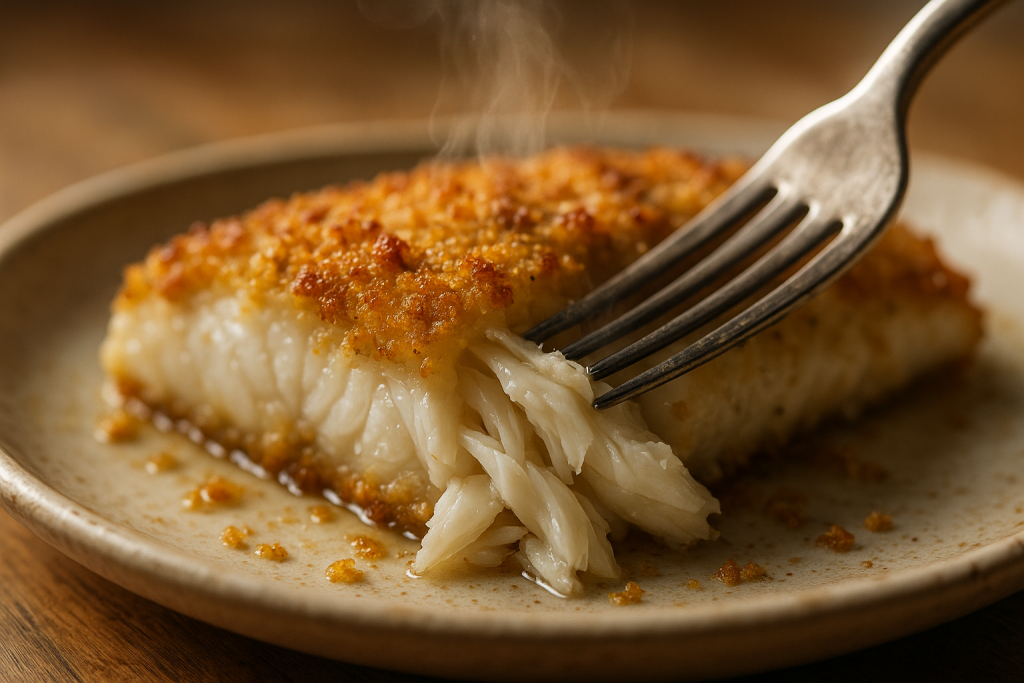
- Bake 12 to 15 minutes, until the topping is golden and the fish flakes when you press a fork into the thickest part. The USDA target for fish is an internal temperature of 145°F. I pull mine at about 140°F and let it sit 3 minutes, because it keeps cooking on the hot pan.
- Serve with lemon wedges on the side. The squeeze at the table matters more than you’d think.
If the topping isn’t as brown as you want at 15 minutes, run it under the broiler for 60 to 90 seconds. Stand there and watch it. Cracker crumbs go from golden to black faster than you can get back from the fridge.
Why most people think they hate fish
Three things make fish taste fishy, and none of them are the fish’s fault.
The first is age. That strong smell people associate with fish is a compound that develops as fish breaks down. Truly fresh fish smells like almost nothing, maybe faintly of seawater. If a package smells sharp or ammoniac when you open it at home, that’s your answer, and no amount of lemon will fix it.
The second is overcooking. Fish goes from moist to dry in about two minutes. Past that point, the proteins squeeze out moisture and the flavor concentrates in a way nobody enjoys. This is the single most common mistake, and it’s why I check fish early rather than trusting a timer.
The third is picking the wrong fish for a nervous eater. Salmon, mackerel and sardines are oily and strongly flavored. They’re wonderful, but they are not where you start with someone who’s unsure.
Which fish to buy if you’re not sure
Buy mild, firm, white, and thick. Here’s how the common supermarket options sort out.
| Fish | Flavor | Texture | Good starting point? |
|---|---|---|---|
| Cod | Very mild, slightly sweet | Large flakes, tender | Yes, my first pick |
| Haddock | Very mild | Finer flake than cod | Yes |
| Tilapia | Mild, neutral | Soft, thin fillets | Yes, but cook it fast |
| Halibut | Mild, clean | Firm, meaty | Yes, if the price doesn’t scare you |
| Salmon | Rich, pronounced | Dense, oily | Later |
| Mackerel, sardines | Strong | Oily | Not yet |
Frozen is fine. Frozen is often better. Most fish sold at the counter was frozen on the boat and thawed in the back anyway, so buying it still frozen means you control how long it sits around. Look for individually vacuum-sealed fillets, and thaw them overnight in the fridge on a plate. Never thaw fish in its sealed bag at room temperature.
If you forgot to thaw, put the sealed fillets in a bowl of cold water for 20 to 30 minutes. Change the water once. Skip the microwave defrost setting entirely, it cooks the thin edges while the middle is still ice.
The texture problem nobody talks about
Plenty of people who say they dislike the taste actually dislike the texture. Soft, slippery, falling apart on the fork. That’s why the cracker crust in this recipe does so much work: you get crunch on top and firm flakes underneath, and the whole thing eats more like chicken cutlet than like fish.
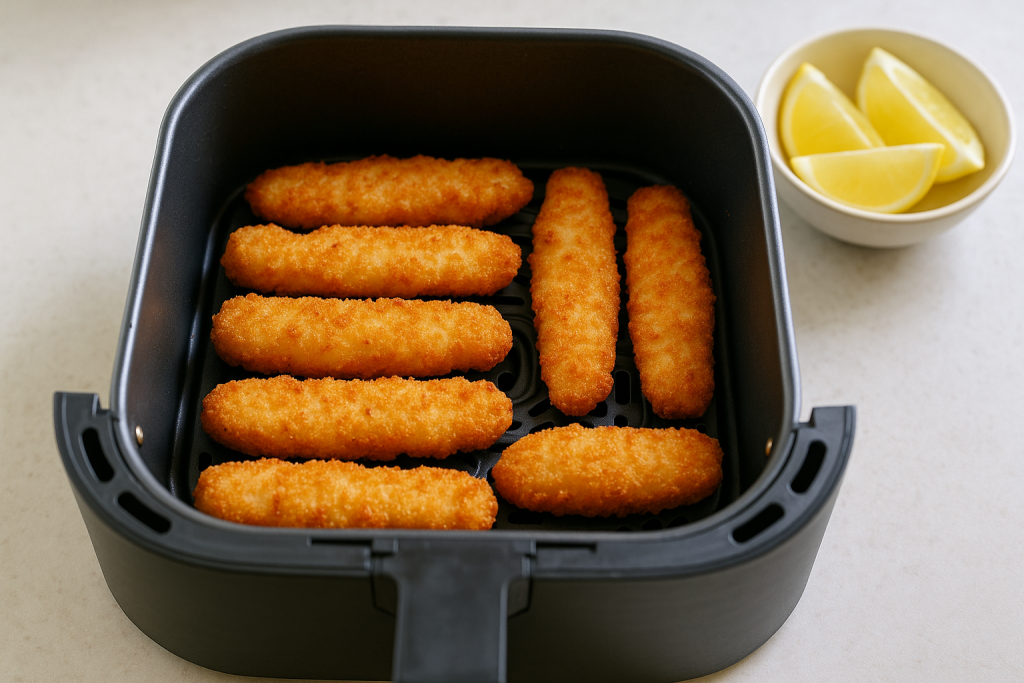
If texture is the sticking point in your house, lean into it. Cut the cod into 1-inch strips before topping and baking, so every piece has more crust per bite. Or go the fish-stick route and bread the strips fully, then air fry at 400°F for 10 to 12 minutes, flipping once at the halfway mark. Same fish, zero resistance.
Substitutions that actually work
Haddock or pollock swap in one-for-one with cod. Tilapia works too, but the fillets are usually only about half an inch thick, so check at 9 minutes.
No crackers? Use 1 cup panko tossed with the same butter. It browns faster, so start checking at 10 minutes. Regular dry breadcrumbs work but come out sandier, and I’d add an extra tablespoon of butter.
For dairy-free, use olive oil instead of butter and bump the salt to 3/4 teaspoon, since you lose the salt from the butter. For gluten-free, crushed gluten-free crackers or GF panko behave the same way.
If you want heat, add 1/4 teaspoon cayenne to the crumbs. If you want it brighter, stir a tablespoon of grated Parmesan and an extra teaspoon of zest into the topping.
Serving it so the plate makes sense
Cod is lean and light, so it needs something with substance next to it. Roasted baby potatoes work, and you can put them in the oven 20 minutes before the fish at the same 400°F. Buttered orzo, rice pilaf, or a simple green salad with a sharp vinaigrette all do the job.
What I’d skip: creamy sauces on the side. They fight the crisp topping, and the leftovers get soggy.
Storing and reheating
Cooked fish keeps 3 days in an airtight container in the fridge. Beyond that I throw it out, no debate.
Reheat it in a 350°F (175°C) oven or toaster oven for 8 to 10 minutes, uncovered, so the topping crisps back up. The microwave will make it rubbery and will make your kitchen smell like a dock. If you only have a microwave, cover the fish loosely and heat in 30-second bursts at 50 percent power.
I don’t recommend freezing it after baking. The crumb topping turns to paste. What I do instead: crush the crackers and mix the topping ahead, then keep it in a zip-top bag in the fridge for up to 3 days. Then dinner is just pat the fish dry, press on the crumbs, and bake.