I cooked steak on a grill for years and thought the crust came from the fire. It doesn’t. It comes from a dry surface and a pan hot enough to hurt, and my cast iron skillet does that better than my grill ever did. The only real trick is getting the moisture off the meat before it hits the metal.
Here is how I do it on a Tuesday, in about twenty minutes, with a steak from the regular grocery store.
Prep time: 10 minutes active, plus 45 minutes uncovered in the fridge if you have it
Cook time: 8 to 12 minutes
Total time: about 25 minutes
Serves: 2
What You Will Need
- 2 boneless ribeye or New York strip steaks, 1 to 1 1/2 inches thick, about 12 oz each
- 1 1/2 teaspoons kosher salt (about 3/4 teaspoon per steak)
- 1/2 teaspoon coarsely ground black pepper
- 1 tablespoon neutral oil with a high smoke point, such as canola, grapeseed or refined avocado oil
- 2 tablespoons unsalted butter
- 3 garlic cloves, smashed, skin on
- 3 or 4 sprigs fresh thyme or rosemary
Thickness matters more than the cut. A 1-inch steak gives you enough time to build color before the middle overcooks. Anything under 3/4 inch will be gray inside by the time the outside browns, and no technique fixes that. If thin steaks are what you have, cook them fast and hot and accept medium.
Steps
- Salt early and leave the steak uncovered. Pat both sides dry with paper towels, season with the salt and pepper, and set the steaks on a rack over a plate in the fridge for at least 45 minutes, up to 24 hours. The cold dry air pulls surface moisture out. This is the single step that separates a real crust from a sad steamy one. No time? Salt right before cooking and blot the steak dry twice with paper towels.
- Take the chill off. Pull the steaks out while the pan heats, 20 to 30 minutes on the counter if you can. They won’t come to room temperature and they don’t need to, but a fridge-cold center slows the whole thing down.
- Heat the skillet dry. Cast iron or heavy carbon steel, over medium-high, for 5 full minutes. Nonstick will not work here, its coating isn’t made for this heat. The pan is ready when a drop of water skitters and vanishes in a second or two.
- Turn on the fan, open a window. Do it before the oil goes in, not after the alarm sounds. Pull the battery out of the smoke detector if you have to, and put it back the same night.
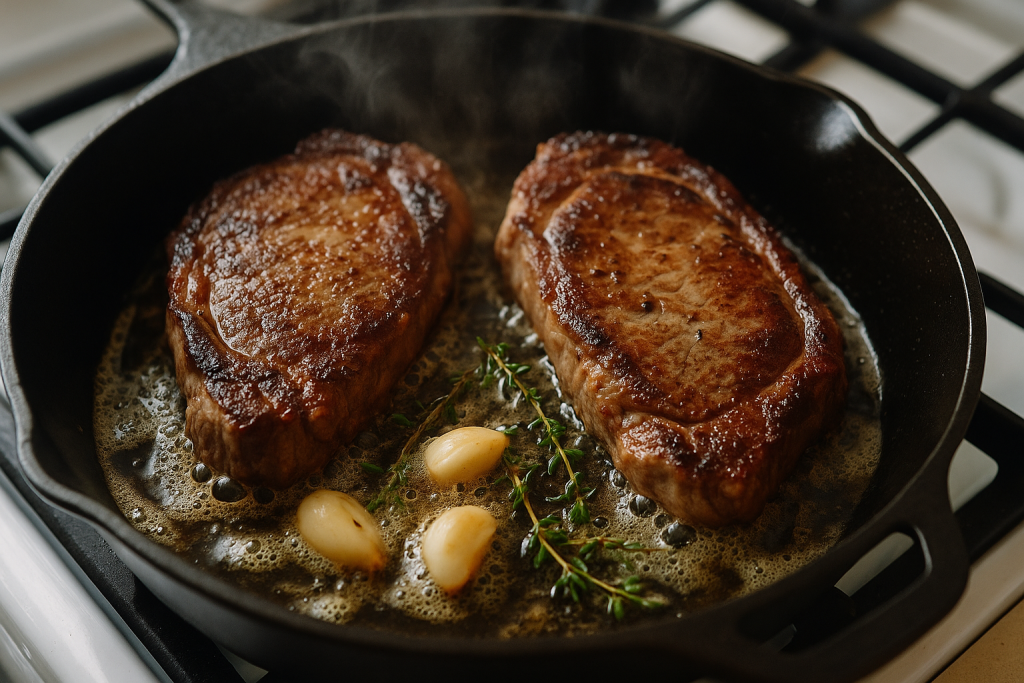
- Add the oil, then the steaks. One tablespoon, swirled to coat. When it shimmers and just barely smokes, lay the steaks away from you. You want an immediate loud sizzle. If it’s quiet, the pan isn’t hot enough, and you should pull the steak back out for a minute while it recovers.
- Leave it alone for 3 minutes. Don’t poke it, don’t slide it around. Then flip and give the second side 2 to 3 minutes.
- Add butter, garlic and herbs. Drop them in, tilt the pan toward you, and spoon the foaming butter over the steaks for about 60 to 90 seconds. Adding the butter at the end matters, because milk solids burn fast at searing heat.
- Check the temperature. Instant-read thermometer into the thickest part, from the side, not touching fat or bone. Pull at 130°F for medium-rare, 138°F for medium. Carryover heat adds about 5 degrees while it rests. USDA recommends 145°F with a 3-minute rest for whole cuts of beef, so cook to that if you are serving anyone who should avoid rarer meat.
- Rest 5 to 10 minutes. On a cutting board, loosely tented or not tented at all. Tight foil softens the crust you just worked for. Slice against the grain.
The Two Things That Kill a Crust
Wet meat is the first. Water has to boil off before the surface can get above 212°F, and until then you are steaming, not searing. Every minute spent evaporating is a minute the inside keeps cooking.
Crowding is the second. Two steaks in a 12-inch skillet is fine. Three is not. All that moisture has nowhere to go, the pan temperature drops, and you get a gray band around a gray middle. Cook in batches and hold the first steak on a rack in a 200°F (95°C) oven.
Thick Steaks Need the Oven
Once a steak passes about 1 1/2 inches, the outside burns before the center gets there. For those, I sear first then finish in the oven at 400°F (205°C), moving the whole skillet in and checking after 5 minutes. Reverse sear also works: 250°F (120°C) oven until the center hits 115°F, then a 90-second sear per side in a screaming pan. Reverse sear gives a more even pink edge to edge, but it takes 40 minutes or more, so I save it for weekends and thick-cut ribeyes.
For everything between 1 and 1 1/2 inches, straight skillet cooking is faster and the result is just as good.
Pan Sauce From the Drippings
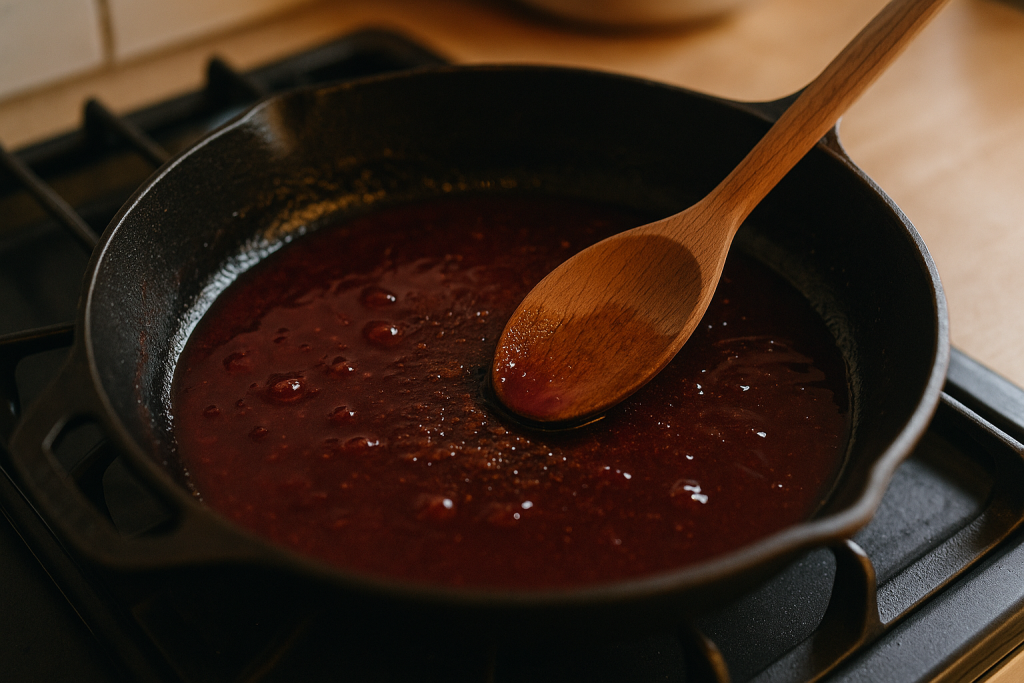
Don’t wash that skillet yet. Pour off all but about a tablespoon of fat, set the pan over medium, and add 1/3 cup dry red wine, beef broth or even water. Scrape up the browned bits with a wooden spoon, let it reduce by half, then swirl in a tablespoon of cold butter off the heat. Takes three minutes and uses the best-tasting part of the whole operation.
Substitutions and What Actually Works
Sirloin and flat iron both sear well and cost less than ribeye. Flat iron is the better value of the two, tender enough to cook to medium-rare and slice thin. Skirt and flank need marinating and a very short cook, which is a different recipe.
Skip olive oil for the sear. Extra virgin starts smoking around 375°F and turns bitter. Save it for the salad and use canola.
No thermometer means guessing, and guessing on a $15 steak is expensive. The finger-poke test works for people who cook steak every week. An instant-read thermometer costs less than two ribeyes and removes the whole problem.
Don’t season with a pepper-heavy rub before a hard sear, since coarse pepper scorches at these temperatures. If you want a lot of pepper, add it in the butter-basting stage or grind it over the rested steak.
Storing and Reheating
Refrigerate leftover steak within two hours, wrapped tight or in an airtight container, and eat it within 3 to 4 days. Slice it cold for sandwiches and salads, where it’s honestly better than reheated.
If you do want it warm, put the slices in a skillet over medium-low with a splash of broth and a pat of butter for 60 to 90 seconds, just until warmed through. The microwave overcooks steak in about ten seconds flat. And keep the rested juices from the cutting board in a small jar in the fridge, they’re the best thing you can pour over reheated slices.