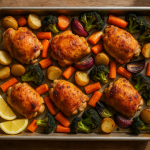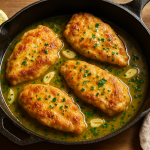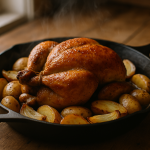
I make crispy chicken thighs in a cast iron skillet more than any other chicken dinner, and the trick that changed everything was starting them in a cold pan. No preheating, no oil spattering across the stove, no guessing. The skin renders slowly, crisps into something that actually shatters when you cut it, and the meat stays juicy because the thigh never gets shocked by screaming-hot metal.
Four ingredients, one pan, one flip. That is the whole thing.
Prep time: 10 minutes (plus optional dry-brine time)
Cook time: 35 minutes
Total time: 45 minutes
Serves: 4
What you will need
- 8 bone-in, skin-on chicken thighs (about 3 pounds total)
- 2 teaspoons kosher salt
- 1 teaspoon freshly ground black pepper
- 1 teaspoon garlic powder
- 1/2 teaspoon smoked paprika
- 1 tablespoon neutral oil, such as canola or avocado (only if your skillet is not well seasoned)
- 2 tablespoons unsalted butter
- 3 garlic cloves, smashed
- 3 sprigs fresh thyme (or 1/2 teaspoon dried)
- 1 lemon, halved, for serving
You need a 12-inch cast iron skillet for eight thighs. A 10-inch pan fits six comfortably. Crowding is the single fastest way to steam the skin instead of crisping it, so if your pan is smaller, cook fewer pieces or do two rounds.
Dry the skin, then dry it again
Wet skin cannot crisp. Water has to boil off before browning starts, and while that happens the fat underneath sits there doing nothing. Pat every thigh hard with paper towels, top and bottom, including the folds where skin tucks under.
If you have time, salt the thighs and leave them uncovered on a rack in the fridge for 4 to 24 hours. The salt pulls moisture out, then the fridge air dries the surface. Skin dry-brined overnight comes out noticeably crisper than skin salted five minutes before cooking. It is not required. It is just better.
Mix the salt, pepper, garlic powder, and paprika, and season both sides. Go a little heavier on the skin side.
The steps
- Heat the oven to 425°F (220°C) with a rack in the middle.
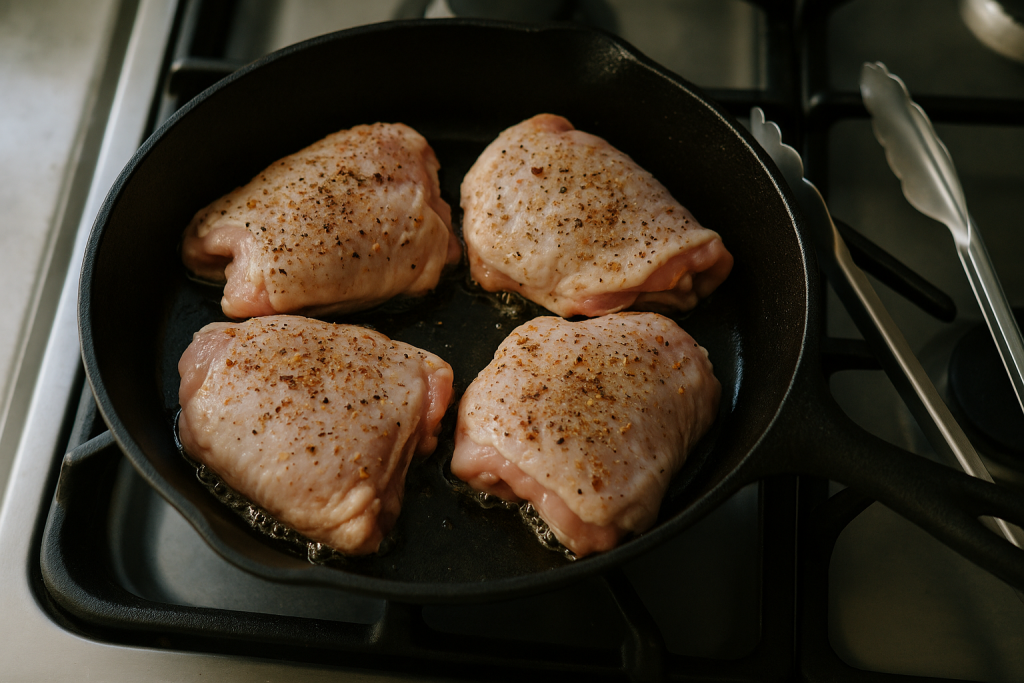
- Place the thighs skin-side down in a cold 12-inch cast iron skillet, leaving a little space between them. If your pan is new or not well seasoned, add the tablespoon of oil first. Otherwise the fat from the skin is plenty.
- Set the skillet over medium heat. You will hear nothing for a minute or two, then a slow sizzle as the fat starts to render. Let it go for 12 to 15 minutes without moving the thighs. Resist lifting them to peek before minute 10.
- Check one piece at minute 12. The skin should be deep golden and release from the pan on its own. If it sticks, it is not ready. Give it another 2 to 3 minutes.
- Tilt the pan and spoon off most of the rendered fat into a heatproof jar, leaving about a tablespoon behind. Save that fat. It is the best thing you will ever roast potatoes in.
- Flip the thighs skin-side up. Tuck in the butter, smashed garlic, and thyme around them.
- Slide the skillet into the oven and roast 15 to 20 minutes, until an instant-read thermometer in the thickest part of a thigh, not touching bone, reads at least 175°F. Chicken is safe at 165°F, but thighs are connective-tissue-heavy and taste better closer to 175 to 185°F, where the collagen has softened.
- Move the thighs to a plate or board, skin-side up, and rest 5 minutes. Do not rest them in the pan, and do not cover them with foil. Trapped steam undoes the crisp in about ninety seconds.
- Squeeze lemon over the top right before serving.
Where this goes wrong
The mistake I see most often is heat that is too high. People crank it to medium-high because they want browning fast, and the skin sets and colors before the fat underneath has rendered out. You get a piece of chicken that looks perfect and has a rubbery, flabby layer beneath the crust. Medium heat, patience, roughly 13 minutes. That is the whole skill.
The second mistake is moving the thighs. Cast iron gives up food when the crust has formed and not a second earlier. If you tug at a thigh and it fights you, leave it alone.
Third: pouring off the fat is not optional if you want crisp skin on the top side too. Leave a half cup of chicken fat in the pan and the thighs essentially confit in the oven. Delicious, but soft.
A skillet note
Cast iron works here because it holds steady heat and goes from stovetop to oven without a second thought. A carbon steel pan does the same job. A heavy stainless skillet works too, though you will want the tablespoon of oil and you should expect a little more sticking.
What does not work is nonstick. Most nonstick coatings are not rated for 425°F, and the surface will not build the fond that makes the pan drippings worth anything.
Wash the skillet with hot water and a brush while it is still warm, dry it on the burner for a minute, and rub in a few drops of oil. Rendered chicken fat in the pan is not seasoning, it is dinner residue, and left overnight it goes rancid and sticky.
Swaps that actually work
Boneless, skinless thighs will not crisp the same way. If that is what you have, sear them 4 minutes per side in a hot skillet and skip the oven entirely, pulling them at 175°F. Different dish, still good.
Bone-in chicken breasts can be cooked the same way but come out of the oven at 165°F, and they need closer to 20 to 25 minutes because they are thicker. Watch the thermometer, not the clock.
For the seasoning, swap the smoked paprika for 1/2 teaspoon dried oregano and add lemon zest to the rub for a Greek lean. Or use 1 teaspoon chili powder plus 1/4 teaspoon cumin and finish with cilantro and lime instead of lemon. Skip the garlic powder if you are out. It adds depth, not structure.
No fresh thyme? Rosemary is stronger, so use one sprig instead of three. Dried herbs go into the rub, not into the pan, where they burn.
Turn the pan drippings into a sauce
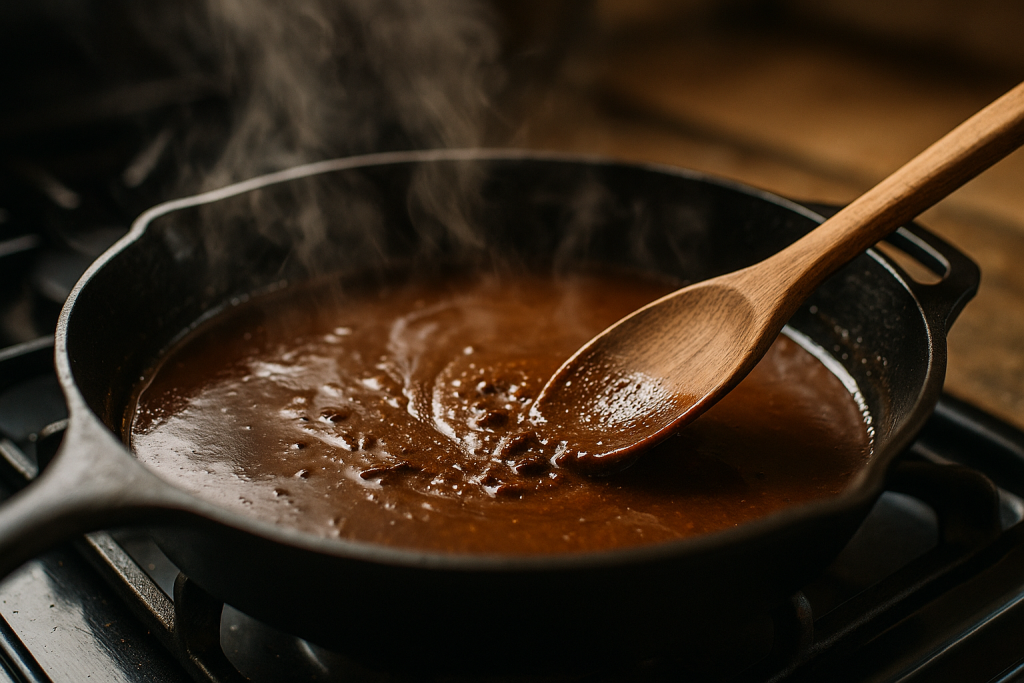
After the thighs come out, set the skillet over medium heat on the stove. Pour in 1/2 cup dry white wine or chicken broth and scrape up the browned bits with a wooden spoon. Let it bubble down by half, about 3 minutes, then swirl in a tablespoon of cold butter off the heat. Salt to taste.
That is a two-minute pan sauce with no flour, no stock reduction, no fuss. Spoon it under the chicken, never over the skin.
What to serve with it
Because the skillet is occupied, I lean on things that cook in the oven alongside or on the stove after. Halved baby potatoes tossed in the reserved chicken fat and roasted at 425°F for 30 minutes go in at the same time the chicken does. A sheet pan of broccoli takes 18 minutes at the same temperature. Rice, a chopped salad with something acidic, or plain buttered egg noodles all work.
Storing and reheating
Cool the thighs to room temperature within two hours, then refrigerate in an airtight container for up to 4 days. Do not stack them if you can help it, and do not seal them while warm.
Reheating in the microwave gives you soft skin, full stop. To bring the crisp back, put the thighs skin-side up on a rack over a sheet pan and heat at 400°F (200°C) for 10 to 12 minutes, until the center reads 165°F. An air fryer at 375°F for 6 to 8 minutes does the same thing faster.
Cooked thighs freeze well for up to 3 months. Wrap each one tightly, thaw overnight in the fridge, and reheat in the oven as above. Freeze the rendered chicken fat too, in a small jar, and use it within 6 months.